
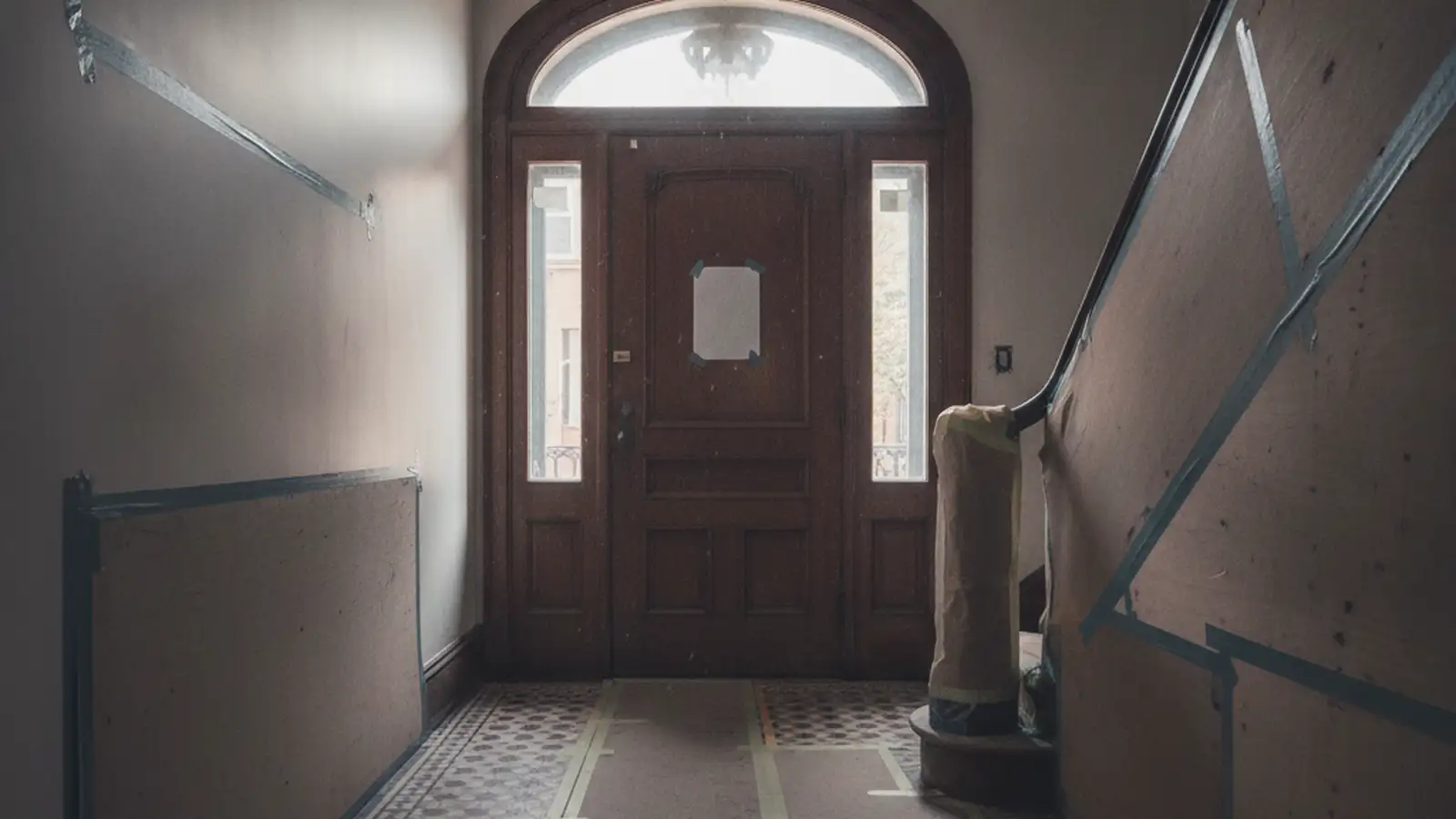
Brooklyn, NY
Permits, Landmarks and Building Access in Brooklyn
The sequence before demolition can start in a Brooklyn building: the asbestos assessment, the Landmarks certificate, the filing, the board, the hours and the container at the curb.
In this borough Landmarks is part of the routine
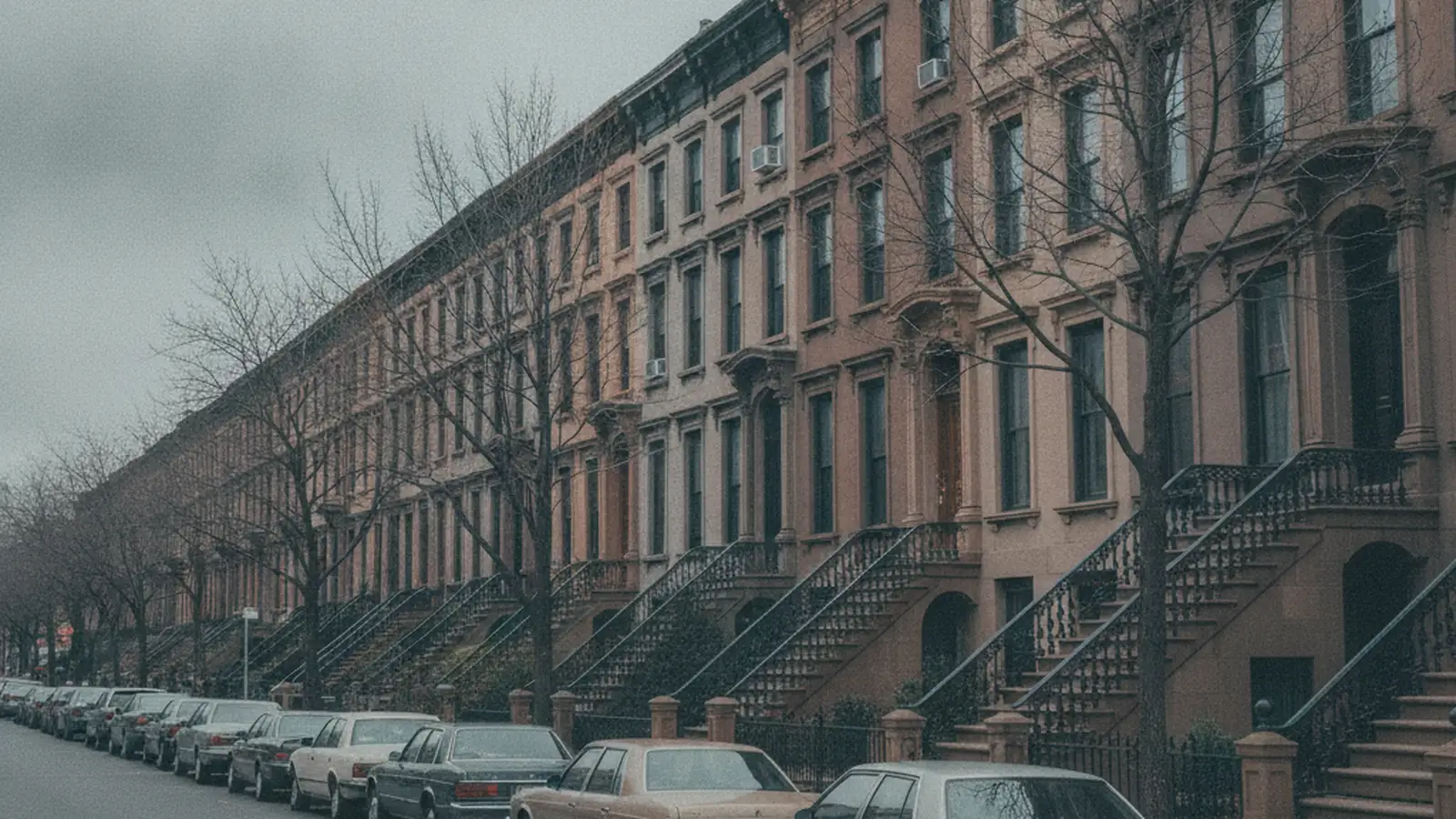
Most of New York treats a Landmarks certificate as the unusual case. In Brooklyn it is close to normal, because so much of the brownstone belt is designated.
Brooklyn Heights, Park Slope, Fort Greene, Clinton Hill, Prospect Heights, Prospect Lefferts Gardens and Crown Heights North are all historic districts, and they are not fringe blocks. They are where a great deal of the borough's renovation work happens. If your address is inside one and your job needs a Department of Buildings permit, a certificate from the Landmarks Preservation Commission sits ahead of that permit.
That is a sequencing fact rather than an obstacle, and the entire difference between a Brooklyn job that starts on time and one that does not is whether somebody knew about it in week one. So on this page it comes second, right behind the asbestos assessment, rather than as a footnote at the end.
First question: does your job need a filing at all?
Not every demolition job needs a Department of Buildings permit, and the answer decides how much of this page applies to you. It also decides whether Landmarks is involved at all, because the certificate is triggered by the permit.
Taking out kitchen units, flooring, a dropped ceiling or fixtures and putting back like for like is generally minor work needing no permit. Removing walls, changing the layout, touching plumbing, gas, sprinkler or standpipe work, altering egress, or anything structural does, and the filing is made by a registered architect or engineer rather than by the demolition contractor.
In a brownstone this is worth settling early rather than assuming. Plaster on masonry and on wood lath conceals which partitions were original and which were added when the house was cut into apartments, and the answer changes what the work needs. Where it is not obvious the design professional decides, and we will tell you honestly on the first call which way we think it goes.
The sequence
-
Step 1 of 6
The asbestos assessment, if the building predates April 1987
For a building built before 1 April 1987, an asbestos assessment has to be on file before the Department of Buildings will issue a permit for work that could disturb material. A DEP certified asbestos investigator inspects the areas the work will touch and files Form ACP-5 with the Department of Environmental Protection where the work is exempt, or an abatement plan where it is not.
Essentially the whole brownstone belt and all of the borough's pre-war apartment stock predate that date. It is the customer's own filing, it is the most common cause of a late start, and it is the first thing to order.
-
Step 2 of 6
The Landmarks certificate, on a designated address
On an individual landmark site, inside a historic district, or in a building containing an interior landmark, the Department of Buildings may not issue a permit until Landmarks has issued a certificate. The trigger is the permit, not whether anyone can see the work from the sidewalk.
Where the work leaves protected architectural features alone, and an interior strip-out normally does, the instrument is a Certificate of No Effect. Staff level, no public hearing, no community board presentation, and a complete application commonly approved in about ten business days. Certain interior work qualifies for an expedited version that returns in about two.
-
Step 3 of 6
Design and filing, where the work needs it
A registered architect or engineer prepares the drawings and files with the Department of Buildings. The permit issues to the licensed contractor performing the permitted work, and demolition inside a larger renovation is normally filed with it as one job.
-
Step 4 of 6
The building's own approval, where there is a board
In a co-op or condo, and in the new towers along the north Brooklyn waterfront, the alteration agreement is a second approval that has nothing to do with the city. Drawings, insurance naming the building, a deposit and a schedule, plus the rules the job runs to.
An owner of a whole house skips this entirely, which is why the same scope can run to two completely different calendars a few blocks apart.
-
Step 5 of 6
Work hours, and a variance if you need one
Construction activity runs 7:00 AM to 6:00 PM on weekdays. Anything earlier, later or at the weekend needs an After Hours Variance from the Department of Buildings, filed a few business days before the first day and covering days inside a fourteen day window.
The rule covers the activity rather than the machinery, so quiet weekend work needs one too. A co-op will usually set narrower hours than the city, and on an attached block the practical limit is the neighbours either side.
-
Step 6 of 6
The container, the stoop and the sidewalk
The last thing settled and the one that decides how the job is staged. In most of the brownstone belt there is no driveway, so the container stands at the curb, and its placement, its duration and the sidewalk protection around it are the first things the block notices.
Alternate-side parking and school hours decide when it can actually arrive and leave. We work that out for your street before we quote, because a container that cannot be swapped on the day you need it swapped stops the whole job.
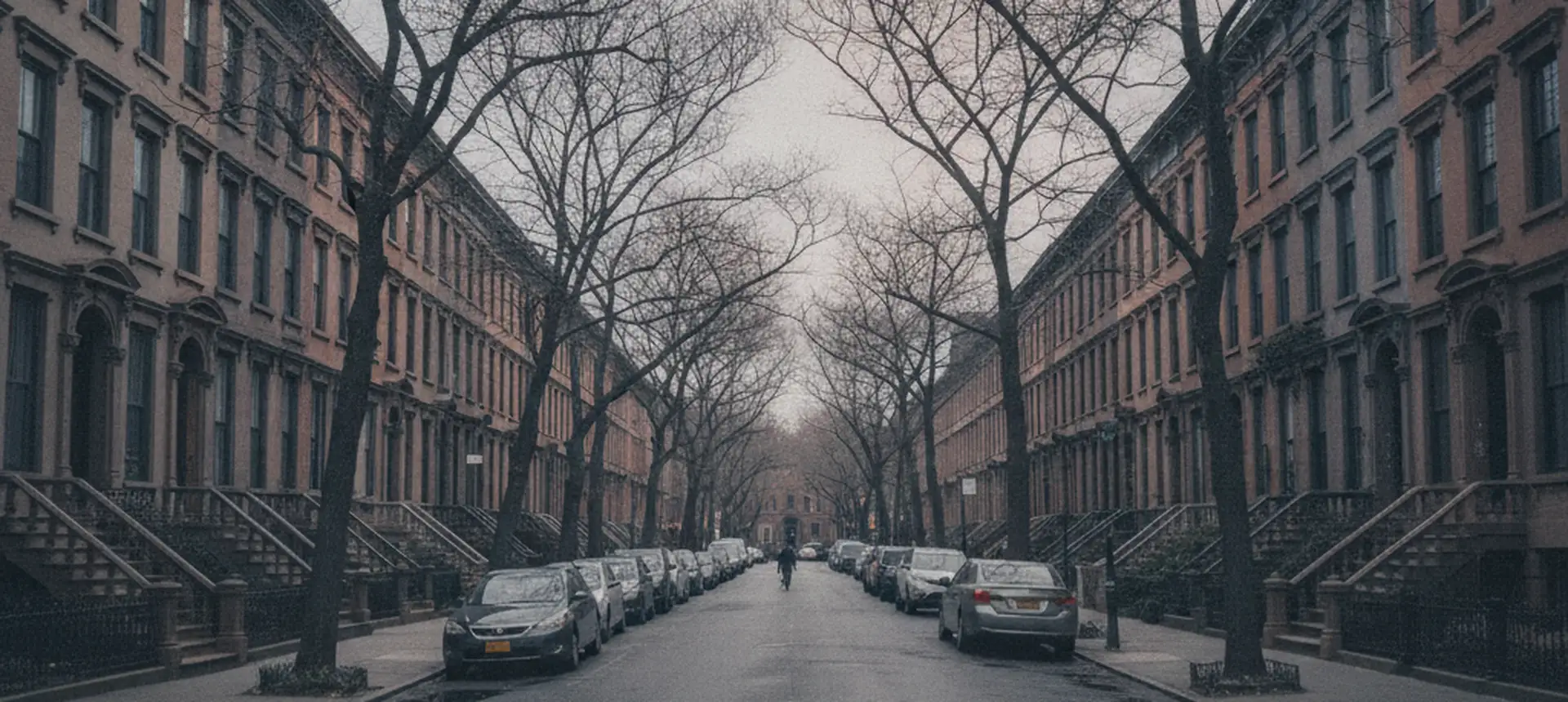
A Brooklyn brownstone street
What the brownstone adds to the sequence
A row house has no freight elevator to book and no managing agent to ask, which removes two of the slowest steps in this city. What it puts in their place is a set of arrangements with the street.
Everything leaves down the stoop or out through the garden level, across a public sidewalk, into a container the neighbours are looking at. The stoop and the treads get boarded before the first load. The sidewalk stays clear and passable throughout, because it is not ours and people are using it.
None of that is regulated in the way a permit is, and all of it decides whether the work runs quietly to the end. On an attached block we would rather speak to the houses either side before the first day than after the first complaint.
Every step on this page except the last is the owner's, the design professional's or the building's to carry out. We do not file permits, order asbestos assessments or make Landmarks applications on your behalf. What we do is tell you on the first call which steps your job triggers and in what order, so the schedule you plan against is a real one.
Common questions
Does a historic district mean I need Landmarks approval?
For permitted work, yes. In this borough that applies to a great deal of the housing people renovate.
Inside a historic district, on an individual landmark, or in a building with an interior landmark, the Department of Buildings will not issue a permit until the Landmarks Preservation Commission has issued a certificate. The trigger is the permit rather than whether the work is visible from the street.
For interior demolition that does not touch a protected feature, that certificate is a Certificate of No Effect: staff level, no hearing, and commonly issued within about ten business days, with an expedited route for certain interior work. Check your designation before the design is finished rather than after, and it barely registers on the programme.
What is an ACP-5 and when do I need one?
Form ACP-5 is the Department of Environmental Protection form a certified asbestos investigator files to certify that a project is exempt from asbestos abatement requirements, either because no asbestos-containing material is present in the areas the work will disturb, or because it is under the thresholds and will not be disturbed.
You need one when the building was built before 1 April 1987 and the work needs a Department of Buildings permit. In the brownstone belt that is effectively every house, so treat it as the normal first step. The permit waits on it, so order the inspection early.
What is an After Hours Variance?
Permission from the Department of Buildings to carry out construction activity outside the legal hours of 7:00 AM to 6:00 PM on weekdays.
It is filed by the permit holder a few business days before the first day of after-hours work and can cover working days inside a fourteen day window. It covers the activity rather than the noise, so quiet weekend work needs one as well.
On an attached street the more useful question is usually not what the city permits but what the block will live with. A row house shares walls on both sides, and a job that keeps reasonable hours finishes with the neighbours still speaking to the owner.